Multiverse Mania vs Reality - video
https://www.youtube.com/watch?v=nQJV4fH6kMo
Paper:
https://docs.google.com/document/d/1K1zhcd3ElF-3G_DYlMYBR4qaZrvU09lg0MqmhvN2Sw8/edit
All videos and papers referenced in this video may be accessed in the link provided in the video description.
George Ellis recently wrote a paper pointing out the fact that multiverse advocates do not have any experimental evidence validating their claims for the various forms of multiverse theories that they have postulated over the last twenty years or so,,,
Physics on Edge - George Ellis - August 2017
Excerpt: Theoretical physics and cosmology find themselves in a strange place. Scientific theories have since the seventeenth century been held tight by an experimental leash. In the last twenty years or so, both string theory and theories of the multiverse have slipped the leash. Their owners argue that this is no time to bring these subjects to heel.
It is this that is strange.,,,
The multiverse is a collection, set, or ensemble of possibly disjoint universes. They are possible because no one knows whether they exist. Max Tegmark has contemplated four different kinds of multiverse, and Brian Greene, nine.1 Nothing exceeds like excess.
The cosmologist, Martin Rees, has argued that our universe cannot plausibly end at the visual horizon.,,,
Alan Guth, Andrei Linde, and Alexander Vilenkin have embraced the multiverse because its existence follows from some current cosmological theories.,,,
String theory, Leonard Susskind has argued, is the correct theory of quantum gravity. Different string vacua are sufficiently distinct that their physics varies, or may vary. Each of them, in principle, embodies a universe. They may be related to inflationary universes. Since no one can determine which one is real, Susskind is disposed to accept them all.
Roger Penrose, Lee Smolin, Paul Steinhardt, and Neil Turok have all proposed that the multiverse arises in time rather than space. If the constants of nature are different in each new expanding universe, as Smolin has suggested, the result is endless variety; if they are the same, as Penrose suggested, the result is a form of eternal return.
Sean Carroll, David Deutsch, Max Tegmark, and David Wallace have all claimed that the quantum wave function of the universe splits into multiple branches every time a measurement is made. Each branch is a universe.4 This idea was originally advanced by Hugh Everett III in his Princeton dissertation.,,,
David Lewis and Dennis Sciama have argued for a strong form of modal realism. Whatever is possible is real.,,,
Not to be outdone, Tegmark has argued that every consistent mathematical structure exists in some disconnected universe.,,,,,,
Carlo Rovelli has responded to Dawid:
"… The very existence of reliable theories is what makes science valuable to society… Dawid’s merit is to have emphasized and analyzed some of the non-empirical arguments that scientists use in the “preliminary appraisal” of theories. His weakness is to have obfuscated the crucial distinction between this and validation: the process where a theory becomes reliable, gets accepted by the entire scientific community, and potentially useful to society. The problem with Dawid is that he fails to say that, for this, only empirical evidence is convincing.36"
Hear, hear.
http://inference-review.com/article/physics-on-edge
- George Ellis is Emeritus Distinguished Professor of Complex Systems in the Department of Mathematics and Applied Mathematics at the University of Cape Town in South Africa.
Moreover, not only do atheists not have any experimental evidence validating their claims for multiverses, there is actually fairly strong experimental evidence that can be mustered against their claims for multiverses.
But, before we get into that, what is particularly interesting about George Ellis criticizing these various evidence free multiverse scenarios is that it was George Ellis himself who, almost 50 years ago, along with Stephen Hawking and Roger Penrose, extended General Relativity to prove that “time and space had a finite beginning that corresponded to the origin of matter and energy."
Big Bang Theory - An Overview of the main evidence
Excerpt: Steven Hawking, George Ellis, and Roger Penrose turned their attention to the Theory of Relativity and its implications regarding our notions of time. In 1968 and 1970, they published papers in which they extended Einstein's Theory of General Relativity to include measurements of time and space.1, 2 According to their calculations, time and space had a finite beginning that corresponded to the origin of matter and energy."3
Steven W. Hawking, George F.R. Ellis, "The Cosmic Black-Body Radiation and the Existence of Singularities in our Universe," Astrophysical Journal, 152, (1968) pp. 25-36.
Steven W. Hawking, Roger Penrose, "The Singularities of Gravitational Collapse and Cosmology," Proceedings of the Royal Society of London, series A, 314 (1970) pp. 529-548.
http://www.big-bang-theory.com/
Prior to this development by Ellis, Hawking and Penrose, as well as prior to the discovery of the Cosmic Microwave Background (CMB) and the discovery of other evidences, scientists, by and large, had assumed that the universe had always existed and was infinite in size.
Finding that the universe had a beginning was unexpected and unwelcome by many scientists. As Robert Jastrow commented, "For the scientist who has lived by his faith in the power of reason, the story ends like a bad dream. He has scaled the mountains of ignorance; he is about to conquer the highest peak; as he pulls himself over the final rock, he is greeted by a band of theologians who have been sitting there for centuries."
"For the scientist who has lived by his faith in the power of reason, the story ends like a bad dream. He has scaled the mountains of ignorance; he is about to conquer the highest peak; as he pulls himself over the final rock, he is greeted by a band of theologians who have been sitting there for centuries."
- Robert Jastrow, God and the Astronomers, W.W. Norton, New York, 1978, p. 116
Einstein himself found the notion of a beginning for the universe to be irritating and senseless.
Einstein failed to notice that his theory predicted an exploding Universe. He was disturbed by the idea of a Universe that blows up because it implied that the world had a beginning. He wrote to de Sitter, "This circumstance of an expanding universe is irritating" and in another letter "To admit such possibilities seems senseless to me"
- Robert Jastrow - Until the Sun Dies - pg. 44 - 1977
https://books.google.com/books?id=gBVThe2w7O4C&pg=PA44
In fact, Einstein's self admitted “biggest blunder of his life” was when he added a cosmological constant to General Relativity to reflect a static universe that had always existed.
Cosmological constant
Excerpt: Einstein included the cosmological constant as a term in his field equations for general relativity because he was dissatisfied that otherwise his equations did not allow, apparently, for a static universe: gravity would cause a universe which was initially at dynamic equilibrium to contract. To counteract this possibility, Einstein added the cosmological constant.[1] However, soon after Einstein developed his static theory, observations by Edwin Hubble indicated that the universe appears to be expanding; this was consistent with a cosmological solution to the original general-relativity equations that had been found by the mathematician Friedmann, working on the Einstein equations of general-relatvity. Einstein later referred to his failure to accept the validaton of his equations; when they had predicted the expansion of the universe in theory, before it was demonstrated in observation of the cosmological red shift, as the “biggest blunder” of his life.
http://en.wikipedia.org/wiki/Cosmological_constant#History
Einstein’s Greatest Blunder – The Cosmological Constant
"Much later, when I was discussing cosmological problems with Einstein, he remarked that the introduction of the cosmological term was the biggest blunder of his life."
— George Gamow, My World Line, 1970
http://www.jb.man.ac.uk/~jpl/cosmo/blunder.html
As well, Arthur Stanley Eddington stated that 'the notion of a beginning of the present order of Nature is repugnant to me.'
Arthur Stanley Eddington, Darwinists, and Repugnant Notions - April 26, 2007
Excerpt: I have no “philosophical axe to grind” in this discussion. Philosophically, the notion of a beginning of the present order of Nature is repugnant to me.
Eddington AS. 1931. The end of the world: from the standpoint of mathematical physics. Nature 127:447-453.
In fact, the term “Big Bang” itself was coined by Fred Hoyle as a term of derision against the notion of a beginning for the universe.
Fred Hoyle - Rejection of the Big Bang
Excerpt: Hoyle was a strong critic of the Big Bang. He coined the term "Big Bang" on BBC radio's Third Programme broadcast on 28 March 1949. It was popularly reported by George Gamov and his opponents that Hoyle intended to be pejorative, and the script from which he read aloud was interpreted by his opponents to be "vain, one-sided, insulting, not worthy of the BBC".[21] Hoyle explicitly denied that he was being insulting and said it was just a striking image meant to emphasize the difference between the two theories for the radio audience.[22] In another BBC interview he said "The reason why scientists like the "big bang" is because they are overshadowed by the Book of Genesis. It is deep within the psyche of most scientists to believe in the first page of Genesis".[23]
https://en.wikipedia.org/wiki/Fred_Hoyle#Rejection_of_the_Big_Bang
Here’s the radio recording of Fred Hoyle disparagingly naming the creation event of the universe as ‘The Big Bang’: (He personally favored the ‘steady state' model for the universe)
History of the Big Bang - Simon Singh, PhD - video
http://www.youtube.com/watch?feature=player_detailpage&v=7UTpGKbkS2g#t=2340s
Yet, despite the overt philosophical bias that many prominent scientists have had, and apparently still have, against the universe having a beginning, the scientific evidence that the entire universe, all space, time, matter, and energy of the universe, started at the Big Bang is now very well established.
Beyond The Big Bang: William Lane Craig Templeton Foundation Lecture (HQ) 1/6 - video
http://www.youtube.com/watch?v=esqGaLSWgNc
Evidences For The Big Bang - Michael Strauss – video (4:50 - mark - main evidences) (14:30 mark - unscientific speculations involving quantum Planck time persist)
Evidence Supporting the Big Bang
http://www.astronomynotes.com/cosmolgy/s7.htm
“All the evidence we have says that the universe had a beginning.” -
Cosmologist Alexander Vilenkin of Tufts University in Boston – in paper delivered at atheist Stephen Hawking's 70th birthday party (Characterized as 'Worst Birthday Present Ever') – January 2012
But what I find interesting in all the current multiverse scenarios postulated by atheists is that if you scratch on the surface of any of their multiverse scenarios, you will find, not any compelling evidence for a multiverse as George Ellis has pointed out, but you will instead find a random infinity that was conjectured in the imagination of the atheist. An imagined random infinity that was conjectured by them for them to try to get back to some type of belief that the universe itself is infinite in some way, shape, or form, and so as to, apparently, continue to try to avoid any inference to God.
Robert Sheldon comments that "Multiverse theory is designed for one purpose, and one purpose only, and that is to defend atheism. It makes no predictions, it gives no insight, it provides no control, it produces no technology, it advances no mathematics, it is a science in name only, because it is really metaphysics."
But Who Needs Reality-Based Thinking Anyway? Not the New Cosmologists - Denyse O'Leary - January 2, 2014
Excerpt: "Multiverse theory is designed for one purpose, and one purpose only, and that is to defend atheism. It makes no predictions, it gives no insight, it provides no control, it produces no technology, it advances no mathematics, it is a science in name only, because it is really metaphysics."
Dr. Robert B. Sheldon - PhD Physics
http://www.evolutionnews.org/2014/01/but_who_needs_r080281.html
In fact, much like Darwinian evolution is a unfalsifiable pseudoscience that is based on unrestrained imagination and bad liberal theology,,
Darwinian Evolution: A Pseudoscience based on Unrestrained Imagination and Bad Liberal Theology - video
Paper:
https://docs.google.com/document/d/1aT_Thrfqs9sdT0Hsg2y3hxhTDntCD8mypi2AO_Rjee8/edit
These multiverse theories are also unfalsifiable pseudosciences that are found to be based on unrestrained imagination and bad liberal theology,,
As John Horgan states “These multiverse theories all share the same fundamental defect: They can be neither confirmed nor falsified. Hence, they don’t deserve to be called scientific, according to the well-known criterion proposed by the philosopher Karl Popper. Some defenders of multiverses and strings mock skeptics who raise the issue of falsification as “Popperazi” — which is cute but not a counterargument. Multiverse theories aren’t theories — they’re science fictions, theologies, works of the imagination unconstrained by evidence.”
Is speculation in multiverses as immoral as speculation in subprime mortgages?
- John Horgan - January 28, 2011
Excerpt: These multiverse theories all share the same fundamental defect: They can be neither confirmed nor falsified. Hence, they don’t deserve to be called scientific, according to the well-known criterion proposed by the philosopher Karl Popper. Some defenders of multiverses and strings mock skeptics who raise the issue of falsification as “Popperazi” — which is cute but not a counterargument. Multiverse theories aren’t theories — they’re science fictions, theologies, works of the imagination unconstrained by evidence.
Max Tegmark, in an article entitled 'Parallel Universes', offers an overview of four different kinds of multiverse theories that have been postulated by atheists.
Parallel Universes by Max Tegmark – May 2003
http://space.mit.edu/home/tegmark/PDF/multiverse_sciam.pdf
In Tegmark's ‘Level I multiverse’ we find that the ‘Level I multiverse’ is,, simply a region of space of this universe that is too far away for us to have seen yet'. Tegmark speculates that this unobserved part of the universe may be infinite and may therefore contain an infinite number of parallel universes.
Parallel Universes by Max Tegmark - 2003
THE SIMPLEST TYPE of parallel universe is simply a region of space that is too far away for us to have seen yet.
LEVEL I MULTIVERSE
THE SIMPLEST TYPE of parallel universe is simply a region of space that is too far away for us to have seen yet. The farthest that we can observe is currently about 4 x 10^26 meters, or 42 billion light-years — the distance that light has been able to travel since the big bang began. (The distance is greater than 14 billion light-years because cosmic expansion has lengthened distances.) Each of the Level I parallel universes is basically the same as ours. All the differences stem from variations in the initial arrangement of matter
http://space.mit.edu/home/tegmark/PDF/multiverse_sciam.pdf
Oct. 2022 - Actually, while at first glance it may seem ‘reasonable’, there is a ‘nuanced’ falsification of the ‘no boundary’ universe, which Max Tegmark has termed the ‘LEVEL I MULTIVERSE’.
The main evidence that Tegmark puts forth for postulating that the space of this universe may be infinite, what he refers to as the LEVEL I MULTIVERSE, seems to be the fact that the universe is not 'closed',,, or more precisely, the universe does not have a “positive” convex topology,,, Specifically he states that “Space could be finite if it has a convex curvature”
Parallel Universes by Max Tegmark - 2003
Excerpt: Space could be finite if it has a convex curvature or an unusual topology (that is, interconnectedness). A spherical, doughnut-shaped or pretzel-shaped universe would have a limited volume and no edges. The cosmic microwave background radiation allows sensitive tests of such scenarios [see “Is Space Finite?” by Jean-Pierre Luminet, Glenn D. Starkman and Jeffrey R. Weeks; Scientific American, April 1999]. So far, however, the evidence is against them. Infinite models fit the data, and strong limits have been placed on the alternatives.,,,
The Level I multiverse framework is used routinely to evaluate theories in modern cosmology, although this procedure is rarely spelled out explicitly. For instance, consider how cosmologists used the microwave background to rule out a finite spherical geometry. Hot and cold spots in microwave background maps have a characteristic size that depends on the curvature of space, and the observed spots appear too small to be consistent with a spherical shape.
http://space.mit.edu/home/tegmark/PDF/multiverse_sciam.pdf
Yet, the topology of the universe is not negative and open, and therefore infinite as Tegmark had apparently presupposed.
Picture of three topologies
What is the shape of the universe? - 2001
The flat surface at the left is said to have zero curvature, the spherical surface is said to have positive curvature, and the saddle-shaped surface is said to have negative curvature.,,,
* If space has negative curvature, there is insufficient mass to cause the expansion of the universe to stop. In such a case, the universe has no bounds, and will expand forever. This is called an open universe.
* If space has no curvature (i.e, it is flat), there is exactly enough mass to cause the expansion to stop, but only after an infinite amount of time. Thus, the universe has no bounds and will also expand forever, but with the rate of expansion gradually approaching zero after an infinite amount of time. This is termed a flat universe or a Euclidian universe (because the usual geometry of non-curved surfaces that we learn in high school is called Euclidian geometry).
*If space has positive curvature, there is more than enough mass to stop the present expansion of the universe. The universe in this case is not infinite, but it has no end (just as the area on the surface of a sphere is not infinite but there is no point on the sphere that could be called the "end"). The expansion will eventually stop and turn into a contraction. Thus, at some point in the future the galaxies will stop receding from each other and begin approaching each other as the universe collapses on itself. This is called a closed universe. ,,,
Recent observations (such as the BOOMERANG and MAXIMA cosmic microwave background radiation results, and various supernova observations) (2001) imply that the expansion of the universe is accelerating. If so, this strongly suggests that the universe is geometrically "flat".
https://starchild.gsfc.nasa.gov/docs/StarChild/questions/question35.html
In fact, the topology of the universe is now found to be the least likely of all topologies. Absolute flatness. John Gribbin commented that “Finding the Universe in a state of even approximate flatness today is even less likely than finding a perfectly sharpened pencil balancing on its point for millions of years,,, any deviation of the Universe from flatness in the Big Bang would have grown, and grown markedly, as the Universe expanded and aged.”
"The Universe today is actually very close to the most unlikely state of all, absolute flatness. And that means it must have been born in an even flatter state, as Dicke and Peebles, two of the Princeton astronomers involved in the discovery of the 3 K background radiation, pointed out in 1979. Finding the Universe in a state of even approximate flatness today is even less likely than finding a perfectly sharpened pencil balancing on its point for millions of years, for, as Dicke and Peebles pointed out, any deviation of the Universe from flatness in the Big Bang would have grown, and grown markedly, as the Universe expanded and aged. Like the pencil balanced on its point and given the tiniest nudges, the Universe soon shifts away from perfect flatness."
~ John Gribbin, In Search of the Big Bang - 2000
The universe is flat as a pancake. Coincidence? – Oct. 2016
Excerpt: NEXT time you fancy doing something really frustrating, try balancing a pencil on its sharpened tip. Your efforts will succeed for a second at most. Yet the universe has been succeeding at a similar gravitational trick for the last 13.8 billion years.,,,
Moreover as the following paper states, by analyzing the tiny variations in the temperature of this background radiation, (Which is exactly what Tegmark was trying to do in his 2003 multiverse paper), researchers have now found that “These tiny temperature variations correspond to the largest scale structures of the observable universe. A region that was a fraction of a degree warmer become a vast galaxy cluster, hundreds of millions of light-years across.”
The researchers go on to state, “if the universe was curved in any way, these temperature variations would appear distorted compared to the actual size than we see these structures today.
But they're not.
Our best scientific instruments can't detect any distortion at all between the tiny temperature variations in the microwave background and the largest scale structures of the observable universe.
How do we know the universe is flat? Discovering the topology of the universe - by Fraser Cain - June 7, 2017
Excerpt: With the most sensitive space-based telescopes they have available, astronomers are able to detect tiny variations in the temperature of this background radiation.
And here's the part that blows my mind every time I think about it. These tiny temperature variations correspond to the largest scale structures of the observable universe. A region that was a fraction of a degree warmer become a vast galaxy cluster, hundreds of millions of light-years across.
The cosmic microwave background radiation just gives and gives, and when it comes to figuring out the topology of the universe, it has the answer we need. If the universe was curved in any way, these temperature variations would appear distorted compared to the actual size that we see these structures today.
But they're not. To best of its ability, ESA's Planck space telescope, can't detect any distortion at all. The universe is flat.
https://phys.org/news/2017-06-universe-flat-topology.html
As well, the researchers then go on to state that, the universe must have been flat to 1 part within 1×10^57 parts over its entire 13.8 billion years of expansion.
And in regards to Tegmark's claim that the universe is infinite, they state,, the biggest thing about the universe being flat is what it doesn't tell us. We still don't know if the universe is finite or infinite.
How do we know the universe is flat? Discovering the topology of the universe - by Fraser Cain - June 7, 2017
Excerpt: We say that the universe is flat, and this means that parallel lines will always remain parallel. 90-degree turns behave as true 90-degree turns, and everything makes sense.
But what are the implications for the entire universe? What does this tell us?
Unfortunately, the biggest thing is what it doesn't tell us. We still don't know if the universe is finite or infinite. If we could measure its curvature, we could know that we're in a finite universe, and get a sense of what its actual true size is, out beyond the observable universe we can measure.
We know that the volume of the universe is at least 100 times more than we can observe. At least. If the flatness error bars get brought down, the minimum size of the universe goes up.
And remember, an infinite universe is still on the table.
Another thing this does, is that it actually causes a problem for the original Big Bang theory, requiring the development of a theory like inflation.
Since the universe is flat now, it must have been flat in the past, when the universe was an incredibly dense singularity. And for it to maintain this level of flatness over 13.8 billion years of expansion, in kind of amazing.
In fact, astronomers estimate that the universe must have been flat to 1 part within 1×10^57 parts.
Which seems like an insane coincidence.
https://phys.org/news/2017-06-universe-flat-topology.html
Thus, Tegmark has exactly zero empirical evidence substantiating his belief that the universe must be infinite in size and contain an infinite number of parallel universes. The best Tegmark can claim from the evidence we now have is that we cannot yet rule out an infinitely large universe completely.
Whereas the Theist, on the other hand, with the 1 part within 1×10^57 parts finding for the flatness of the universe can claim another fairly incredible piece of evidence for the fine tuning of the universe.
As the following author commented,,, there are,,, no laws of physics that predict or restrict the topology of the universe to be flat.
Yes, the world (universe) really is flat - December 8, 2016
Excerpt: The universe has all sorts of deformations in space-time where it varies from the perfectly flat. Any place where there’s mass or energy, there’s a corresponding bending of space-time — that’s General Relativity 101. So a couple light beams would naturally collide inside a wandering black hole, or bend along weird angles after encountering a galaxy or two.
But average all those small-scale effects out and look at the big picture. When we examine very old light — say, the cosmic microwave background — that has been traveling the universe for more than 13.8 billion years, we get a true sense of the universe’s shape. And the answer, as far as we can tell, to within an incredibly small margin of uncertainty, is that the universe is flat.,,,
,,, but there are also no laws of physics that predict or restrict the topology.
http://www.uncommondescent.com/intelligent-design/yes-the-world-really-is-flat/
Image of the three different topologies:
In fact, under Atheistic Naturalism there is no reason why any of the constants or laws of physics should remain constant. As the following astronomer commented, “There is absolutely no reason these constants should be constant,”
Scientists Question Nature’s Fundamental Laws – Michael Schirber – 2006
Excerpt: “There is absolutely no reason these constants should be constant,” says astronomer Michael Murphy of the University of Cambridge. “These are famous numbers in physics, but we have no real reason for why they are what they are.”
The observed differences are small-roughly a few parts in a million-but the implications are huge (if they hold up): The laws of physics would have to be rewritten, not to mention we might need to make room for six more spatial dimensions than the three that we are used to.”,,,
The speed of light, for instance, might be measured one day with a ruler and a clock. If the next day the same measurement gave a different answer, no one could tell if the speed of light changed, the ruler length changed, or the clock ticking changed.
http://www.space.com/2613-scientists-question-nature-fundamental-laws.html
Atheistic Naturalism vs. The Laws of Nature - video
Paper:
https://docs.google.com/document/d/1fivJqNS6dlrGVrthDe7JCuDRYbIsDWoDyzpn-qPsaNc/edit
“List of Fine-Tuning Parameters”
https://www.discovery.org/f/11011
And yet, despite the laws of physics failing to predict a flat universe, on the other hand, thousands of years ago, long before modern science came along, the Bible spoke of God stretching a measuring line to mark off the dimensions of the earth's foundations.
Job 38:4-5
“Where were you when I laid the earth’s foundation?
Tell me, if you understand.
Who marked off its dimensions? Surely you know!
Who stretched a measuring line across it?
It is also interesting to note that the observations for temperature variations in the Microwave Background that disconfirmed Tegmark's claim that the universe must be open and infinite, have instead now confirmed, as Tegmark himself reluctantly admits in the following video, that the earth and solar system have a surprisingly special position within the universe in regards to some unexpected anomalies that are found within the temperature variations of the Microwave Background.
At the 13:55 minute mark of this following video, Max Tegmark, an atheist, finally admits, post Planck 2013, that the CMBR anomalies do indeed line up with the earth and solar system
"Thoughtcrime: The Conspiracy to Stop The Principle" - video
https://www.youtube.com/watch?feature=player_detailpage&v=0eVUSDy_rO0#t=832
What Is Evil About The Axis Of Evil? - February 17, 2015
The Cosmic Microwave Background (CMB) Radiation contains small temperature fluctuations.
When these temperature fluctuations are analyzed using image processing techniques (specifically spherical harmonics), they indicate a special direction in space, or, in a sense, an axis through the universe. This axis is correlated back to us, and causes many difficulties for the current big bang and standard cosmology theories. What has been discovered is shocking.
Two scientists, Kate Land and João Magueijo, in a paper in 2005 describing the axis, dubbed it the “Axis of Evil” because of the damage it does to current theories, and (tongue in cheek) as a response to George Bush’ Axis of Evil speech regarding Iraq, Iran and, North Korea.
(Youtube clip on site)
In the above video, Max Tegmark describes in a simplified way how spherical harmonics analysis decomposes the small temperature fluctuations into more averaged and spatially arranged temperature components, known as multipoles.
The “Axis of Evil” correlates to the earth’s ecliptic and equinoxes, and this represents a very unusual and unexpected special direction in space, a direct challenge to the Copernican Principle.
http://www.theprinciplemovie.com/evil-axis-evil/
Humanity - Chemical Scum or Made in the Image of God? - video
This stunning confession by Tegmark in the preceding video is all the more interesting since Tegmark's area of expertise is developing and implementing the most effective techniques for analyzing rich data sets, such as those produced by the Sloan Digital Sky Survey
A Hand-Waving Exact Science - Sheldon Glashow
Excerpt: Tegmark, an accomplished theoretical physicist and cosmologist at MIT, is known for developing and implementing the most effective techniques for analyzing rich data sets, such as those produced by the Sloan Digital Sky Survey (SDSS).
http://inference-review.com/article/a-hand-waving-exact-science
Tegmark also stated that the Level I multiverse sounds trivially obvious. And then asked How could space not be infinite?
Parallel Universes by Max Tegmark – May 2003
If anything, the Level I multiverse sounds trivially obvious. How could space not be infinite? Is there a sign somewhere saying “Space Ends Here — Mind the Gap”?,,,
see “Is Space Finite?” by Jean-Pierre Luminet, Glenn D. Starkman and Jeffrey R. Weeks; Scientific American, April 1999].
http://space.mit.edu/home/tegmark/PDF/multiverse_sciam.pdf
I don't know if Tegmark was being purposely vague and misleading so as to make his Level I multiverse seem more plausible, yet, in the very article that Tegmark himself cited after asking, 'How could space not be infinite?', the answer is given for how space may not be infinite. Simply put, the 4 dimensional spacetime of general relativity itself resolved an age old conundrum for Aristotle, and others, of the universe 'needing an edge', and showed us how space can be finite yet have no problematic boundary,,,
Is Space Finite? 1999
Excerpt: Historically, the idea of a finite universe ran into its own obstacle: the apparent need for an edge. Aristotle argued that the universe is finite on the grounds that a boundary was necessary to fix an absolute reference frame, which was important to his worldview. But his critics wondered what happened at the edge.
Every edge has another side. So why not redefine the “universe” (which roughly means “one side”) to include that other side?
German mathematician Georg F. B. Riemann solved the riddle in the mid-19th century. As a model for the cosmos, he proposed the hypersphere—the three-dimensional surface of a four-dimensional ball, just as an ordinary sphere is the two-dimensional surface of a three-dimensional ball. It was the first example of a space that is finite yet has no problematic boundary,,,
When Albert Einstein published the first relativistic model of the universe in 1917, he chose Riemann’s hypersphere as the overall shape.
http://meghnad.iucaa.ernet.in/~tarun/pprnt/topology/ScAm_starkweek_Finite.pdf
In fact, if Tegmark would have wondered why 'higher dimensional' mathematics had to be developed before Einstein could elucidate General Relativity, or before quantum mechanics could be elucidated, instead of trying to figure out a way to sneak an infinite universe back into the scheme of things,,
The Mathematics Of Higher Dimensionality - Gauss & Riemann - video
https://www.youtube.com/watch?v=mxy3JhPRlV0
Higher dimensional mathematics underlies both Special and General Relativity as well as Quantum Mechanics
https://docs.google.com/document/d/1QmxKULUke6ruyUotfLZuHHdgTZ1wAffIx0FK_3qMhlY/edit
BBC: The Story of Maths: The Frontiers of Space – (Gauss and Riemann at the 45 minute mark) video
Quantum Mechanics, Special Relativity, General Relativity and Christianity - video
https://www.youtube.com/watch?v=gKggH8jO0pk
Paper:
https://docs.google.com/document/d/1nRZECqs8Iqeqv0GzP5lV6et_K9_rYrz06Tchoa4U0Rw/edit
The Unreasonable Effectiveness of Mathematics in the Natural Sciences - Eugene Wigner - 1960
Excerpt: We now have, in physics, two theories of great power and interest: the theory of quantum phenomena and the theory of relativity.,,, The two theories operate with different mathematical concepts: the four dimensional Riemann space and the infinite dimensional Hilbert space,
http://www.dartmouth.edu/~matc/MathDrama/reading/Wigner.html
,,, then perhaps Tegmark would have realized that this entire universe continues to be sustained from a higher dimension.,, Here is a video that makes that point clear,,,
Double Slit, Quantum-Electrodynamics, and Christian Theism - video
https://www.youtube.com/watch?v=AK9kGpIxMRM
Psalm 115:2-3
Why should the nations say, "Where, now, is their God?" But our God is in the heavens; He does whatever He pleases.
Moreover, perhaps Tegmark would have also realized that the higher dimensional mathematics that undergirds the two theories of relativity in particular also gives us fairly compelling evidence for a higher heavenly dimension and a hellish dimension just as Christians have claimed all along. Here is a video that makes that point clear:
Special and General Relativity compared to Heavenly and Hellish Near Death Experiences - video
https://www.youtube.com/watch?v=XiYz_iK_DTk
In fact, despite Tegmark and other atheists apparently failing to take the four-dimensional space-time of General Relativity seriously enough, it has now been shown, to repeat myself, that "Every solution to the equations of general relativity guarantees the existence of a singular boundary for space and time in the past."
"Every solution to the equations of general relativity guarantees the existence of a singular boundary for space and time in the past."
(Hawking, Penrose, Ellis) - 1970
http://www.leaderu.com/real/ri9404/bigbang.html
As well, general relativity also now shows us that spacetime ceases to exist at the singularity of black holes,,
“Einstein’s equation predicts that, as the astronaut reaches the singularity (of the black-hole), the tidal forces grow infinitely strong, and their chaotic oscillations become infinitely rapid. The astronaut dies and the atoms which his body is made become infinitely and chaotically distorted and mixed-and then, at the moment when everything becomes infinite (the tidal strengths, the oscillation frequencies, the distortions, and the mixing), spacetime ceases to exist.”
Kip S. Thorne – “Black Holes and Time Warps: Einstein’s Outrageous Legacy” pg. 476
Thus, contrary to what Tegmark was trying to imply, 4-dimensional spacetime having unexpected boundaries within General Relativity seems to be a rather common, even a surprising, feature of General Relativity.
In his multiverse article, Max Tegmark then goes on to imagine a LEVEL II MULTIVERSE,,, A LEVEL II MULTIVERSE arises as a consequence of the theory of cosmological inflation.
Parallel Universes by Max Tegmark – May 2003
LEVEL II MULTIVERSE
A SOMEWHAT MORE ELABORATE type of parallel universe emerges from the theory of cosmological inflation. The idea is that our Level I multiverse — namely, our universe and contiguous regions of space — is a bubble embedded in an even vaster but mostly empty volume. Other bubbles exist out there, disconnected from ours. They nucleate like raindrops in a cloud. During nucleation, variations in quantum fields endow each bubble with properties that distinguish it from other bubbles.,,,
Inflation is an extension of the big bang theory and ties up many of the loose ends of that theory, such as why the universe is so big, so uniform and so flat. A rapid stretching of space long ago can explain all these and other attributes in one fell swoop [see “The Inflationary Universe,” by Alan H. Guth and Paul J. Steinhard; Scientific American, May 1984; and “The Self-Reproducing Inflationary Universe,” by Andrei Linde, November 1994].
http://space.mit.edu/home/tegmark/PDF/multiverse_sciam.pdf
The initial purpose of cosmological inflation was to try to explain why the universe is surprisingly flat and so smoothly distributed, or homogeneous.
Yet, Paul Steinhardt of Princeton University, who originally helped to develop inflationary theory in the first place but who is now scathing of it, states that the idea that inflationary theory produces any observable predictions at all,,, is based on a simplification of the theory that simply does not hold true.
"The deeper problem is that once inflation starts, it doesn't end the way these simplistic calculations suggest," he says. "Instead, due to quantum physics it leads to a multiverse where the universe breaks up into an infinite number of patches. The patches explore all conceivable properties as you go from patch to patch. So that means it doesn't make any sense to say what inflation predicts, except to say it predicts everything.
Cosmic inflation is dead, long live cosmic inflation - 25 September 2014
Excerpt: (Inflation) theory, the most widely held of cosmological ideas about the growth of our universe after the big bang, explains a number of mysteries, including why the universe is surprisingly flat and so smoothly distributed, or homogeneous.,,,
Paul Steinhardt of Princeton University, who helped develop inflationary theory but is now scathing of it, says this is potentially a blow for the theory, but that it pales in significance with inflation's other problems.
Meet the multiverse
Steinhardt says the idea that inflationary theory produces any observable predictions at all – even those potentially tested by BICEP2 – is based on a simplification of the theory that simply does not hold true.
"The deeper problem is that once inflation starts, it doesn't end the way these simplistic calculations suggest," he says. "Instead, due to quantum physics it leads to a multiverse where the universe breaks up into an infinite number of patches. The patches explore all conceivable properties as you go from patch to patch. So that means it doesn't make any sense to say what inflation predicts, except to say it predicts everything. If it's physically possible, then it happens in the multiverse someplace
Steinhardt says the point of inflation was to explain a remarkably simple universe. "So the last thing in the world you should be doing is introducing a multiverse of possibilities to explain such a simple thing," he says. "I think it's telling us in the clearest possible terms that we should be able to understand this and when we understand it it's going to come in a model that is extremely simple and compelling. And we thought inflation was it – but it isn't."
And as the old saying goes, a scientific theory that predicts everything predicts nothing at all.
Ironically, even Max Tegmark himself admitted that inflation sabotages our ability to make useful predictions. In fact, he stated that because of inflation “we physicists are no longer able to predict anything at all!”
WHAT SCIENTIFIC IDEA IS READY FOR RETIREMENT? Infinity - Max Tegmark - January 2014 and Feb. 2015
Excerpt: Physics is all about predicting the future from the past, but inflation seems to sabotage this: when we try to predict the probability that something particular will happen, inflation always gives the same useless answer: infinity divided by infinity. The problem is that whatever experiment you make, inflation predicts that there will be infinitely many copies of you far away in our infinite space, obtaining each physically possible outcome, and despite years of tooth-grinding in the cosmology community, no consensus has emerged on how to extract sensible answers from these infinities. So strictly speaking, we physicists are no longer able to predict anything at all!
This means that today’s best theories similarly need a major shakeup, by retiring an incorrect assumption. Which one?
Here’s my prime suspect: infinity.
MAX TEGMARK – Physicist
(actually the ‘theory’ that needs to be retired is the philosophy of Atheistic materialism in general)
http://blogs.discovermagazine.com/crux/2015/02/20/infinity-ruining-physics/#.VOsRyS7cBCA
http://www.theguardian.com/science/2014/jan/12/what-scientific-idea-is-ready-for-retirement-edge-org
Here are a few more criticisms of Inflation theory:
A Matter of Considerable Gravity: On the Purported Detection of Gravitational Waves and Cosmic Inflation - Bruce Gordon - April 4, 2014
Excerpt: Thirdly, at least two paradoxes result from the inflationary multiverse proposal that suggest our place in such a multiverse must be very special: the "Boltzmann Brain Paradox" and the "Youngness Paradox." In brief, if the inflationary mechanism is autonomously operative in a way that generates a multiverse, then with probability indistinguishable from one (i.e., virtual necessity) the typical observer in such a multiverse is an evanescent thermal fluctuation with memories of a past that never existed (a Boltzmann brain) rather than an observer of the sort we take ourselves to be. Alternatively, by a second measure, post-inflationary universes should overwhelmingly have just been formed, which means that our existence in an old universe like our own has a probability that is effectively zero (i.e., it's nigh impossible). So if our universe existed as part of such a multiverse, it would not be at all typical, but rather infinitely improbable (fine-tuned) with respect to its age and compatibility with stable life-forms.
http://www.evolutionnews.org/2014/04/a_matter_of_con084001.html
Inflation
Excerpt: In order to work, and as pointed out by Roger Penrose from 1986 on, inflation requires extremely specific initial conditions of its own, so that the problem of initial conditions is not solved: “There is something fundamentally misconceived about trying to explain the uniformity of the early universe as resulting from a thermalization process. […] For, if the thermalization is actually doing anything […] then it represents a definite increasing of the entropy. Thus, the universe would have been even more special before the thermalization than after.”[104]
Penrose, Roger (1989). “Difficulties with Inflationary Cosmology”. Annals of the New York Academy of Sciences 271: 249–264.
http://en.wikipedia.org/wiki/Inflation_%28cosmology%29#Criticisms
Inflationary paradigm in trouble after Planck - 2013
Anna Ijjas, Paul J. Steinhardt, Abraham Loeb
Excerpt of abstract: More important, though, is that all the simplest inflaton models are disfavored statistically relative to those with plateau-like potentials. We discuss how a restriction to plateau-like models has three independent serious drawbacks: it exacerbates both the initial conditions problem and the multiverse-unpredictability problem and it creates a new difficulty that we call the inflationary “unlikeliness problem.”,,
http://arxiv.org/pdf/1304.2785v2.pdf
One of cosmic inflation theory’s creators (Steinhardt) now questions own theory - April 2011
Excerpt: Inflation adds a whole bunch of really unlikely metaphysical assumptions — a new force field that has a never-before-observed particle called the “inflaton”, an expansion faster than the speed of light, an interaction with gravity waves which are themselves only inferred– just so that it can explain the unlikely contingency of a finely-tuned big bang.
But instead of these extra assumptions becoming more-and-more supported, the trend went the opposite direction, with more-and-more fine-tuning of the inflation assumptions until they look as fine-tuned as Big Bang theories. At some point, we have “begged the question”. Frankly, the moment we add an additional free variable, I think we have already begged the question. In a Bayesean comparison of theories, extra variables reduce the information content of the theory, (by the so-called Ockham factor), so these inflation theories are less, not more, explanatory than the theory they are supposed to replace.,,, after 20 years of work, if we haven’t made progress, but have instead retreated, it is time to cut bait.
Moreover, as if all that was not already bad enough, Tegmark's LEVEL II inflationary MULTIVERSE is now contradicted by the latest Planck findings.
Planck reveals an almost perfect Universe (Disconfirms inflationary models) – video
Quote at 2:00 minute mark: "What's surprising in Planck's latest findings and is inconsistent with prevailing theories, is the presence of unexpected large scale anomalies in the sky. Including a large cold region. Stronger fluctuations in one half of the sky than the other. And less light signals than expected across the entire sky."
Planck spokesman: "When we look at only the large features on this (CMBR) map you find that our find that our best fitting theory (inflation) has a problem fitting the data."
"Planck launched in 2009,, is the 3rd mission to study the Cosmic Microwave Background to date. While these unusual features in the sky were hinted at the two previous US missions, COBE and WMAP, Planck's ability to measure the tiniest of fluctuations in the Cosmic Microwave Background has made these so called anomalies impossible to ignore."
Planck spokesman: "Because of these features that we are finding in the sky, people really are in a situation now where they cannot ignore them any more. ,,, We've established them (the anomalies) as fact!".
https://www.youtube.com/watch?v=M2CWaLU6eMI
And although inflation theory has now been expanded to try and 'explain away' the fine tuning of the universe,,, as this graph from Tegmark’s article illustrates,,,
Parallel Universes by Max Tegmark – May 2003
Evidence – Tegmark
COSMOLOGISTS INFER the presence of Level II parallel universes by scrutinizing the properties of our universe. These properties, including the strength of the forces of nature (right) and the number of observable space and time dimensions (far right), were established by *random processes during the birth of our universe. Yet they have exactly the values that sustain life. That suggests the existence of other universes with other values.
*Please note the metaphysical assumption of random that Tegmark inserted into his sentence.
http://space.mit.edu/home/tegmark/PDF/multiverse_sciam.pdf
here are the graphs he listed:
graph – fine tuning of strength of electromagnetism balanced to strength of strong nuclear force
http://inspirehep.net/record/758952/files/alphaalphas.png
graph – Time vs Space Dimensions
http://ej.iop.org/images/0264-9381/14/4/002/Full/img5.gif
,,,, initially the main purpose of inflation theory, as far as I understand it, was only to try to simply explain why the universe is flat and smooth, and/or homogeneous, as it is. Not to explain the other finely tuned parameters.
Yet, in inflation theory's abject failure to explain why the universe is smooth and flat, or to 'predict' anything else about the universe that is useful, it is interesting to note that the Bible successfully predicted that the universe was, to repeat, flat and also happened to predict it would be round.
Job 38:4-5
“Where were you when I laid the earth’s foundation?
Tell me, if you understand.
Who marked off its dimensions? Surely you know!
Who stretched a measuring line across it?
Proverbs 8:26-27
While as yet He had not made the earth or the fields, or the primeval dust of the world. When He prepared the heavens, I was there, when He drew a circle on the face of the deep,
Job 26:10
He has inscribed a circle on the face of the waters at the boundary between light and darkness.
And here is a illustration of the Microwave Background where you can clearly see for yourself the 'circle of the universe'
Picture of Cosmic Microwave Background Radiation (CMBR)
http://new-universe.org/zenphoto/albums/Chapter4/Illustrations/Abrams47.jpg
Tegmark then goes on to imagine a LEVEL III MULTIVERSE,, A LEVEL III MULTIVERSE results from Everett’s “many-world” interpretation of quantum mechanics.
Parallel Universes by Max Tegmark – May 2003
LEVEL III MULTIVERSE
QUANTUM MECHANICS PREDICTS a vast number of parallel universes by broadening the concept of “elsewhere.” These universes are located elsewhere, not in ordinary space but in an abstract realm of all possible states. Every conceivable way that the world could be (within the scope of quantum mechanics) corresponds to a different universe. The parallel universes make their presence felt in laboratory experiments, such as wave interference and quantum computation.
http://space.mit.edu/home/tegmark/PDF/multiverse_sciam.pdf
And in the many world's interpretation of quantum mechanics, the reality of wave function collapse is denied:
Quantum mechanics
Excerpt: The Everett many-worlds interpretation, formulated in 1956, holds that all the possibilities described by quantum theory simultaneously occur in a multiverse composed of mostly independent parallel universes.[43] This is not accomplished by introducing some new axiom to quantum mechanics, but on the contrary by removing the axiom of the collapse of the wave packet:
http://en.wikipedia.org/wiki/Quantum_mechanics#Philosophical_implications
The many-worlds interpretation is an interpretation of quantum mechanics that asserts the objective reality of the universal wavefunction and denies the actuality of wavefunction collapse.
https://en.wikipedia.org/wiki/Many-worlds_interpretation
This denial of wave function collapse leads to an infinite number of parallel universes,,, As Philip Ball stated, “You avoid the complication of wavefunction collapse, but at the expense of making another universe.,,,”, around the one electron you measure.
Too many worlds - Philip Ball - Feb. 17, 2015
Excerpt:,,, You measure the path of an electron, and in this world it seems to go this way, but in another world it went that way.
That requires a parallel, identical apparatus for the electron to traverse. More – it requires a parallel you to measure it. Once begun, this process of fabrication has no end: you have to build an entire parallel universe around that one electron, identical in all respects except where the electron went. You avoid the complication of wavefunction collapse, but at the expense of making another universe.,,,
http://aeon.co/magazine/science/is-the-many-worlds-hypothesis-just-a-fantasy/
Philip Ball is far from the only person to find the many worlds interpretation of quantum mechanics to be complete nonsense, as these following quotes attest:
A Hand-Waving Exact Science - Sheldon Glashow
Excerpt: Arthur Fine: There is, I think, no sense at all to be made of the splitting of worlds.3
John Bell: The many worlds interpretation seems to me an extravagant, and above all an extravagantly vague hypothesis.4
Murray Gell-Mann: Everett’s ideology that there are many worlds that are equally real is operationally meaningless.5
Steven Weinberg: I find the many worlds interpretation repellent.6
http://inference-review.com/article/a-hand-waving-exact-science
Moreover, despite the fact that wave function collapse is denied in the many world's interpretation, wave function collapse has now been experimentally shown to be a real effect. Here is an article that makes that point clear. in the many world's interpretation of quantum mechanics, the reality of wave function collapse is denied:
Quantum mechanics
Excerpt: The Everett many-worlds interpretation, formulated in 1956, holds that all the possibilities described by quantum theory simultaneously occur in a multiverse composed of mostly independent parallel universes.[43] This is not accomplished by introducing some new axiom to quantum mechanics, but on the contrary by removing the axiom of the collapse of the wave packet:
http://en.wikipedia.org/wiki/Quantum_mechanics#Philosophical_implications
The many-worlds interpretation is an interpretation of quantum mechanics that asserts the objective reality of the universal wavefunction and denies the actuality of wavefunction collapse.
https://en.wikipedia.org/wiki/Many-worlds_interpretation
Quantum experiment verifies Einstein's 'spooky action at a distance' - March 24, 2015
Excerpt: An experiment,, has for the first time demonstrated Albert Einstein's original conception of "spooky action at a distance" using a single particle.
,,Professor Howard Wiseman and his experimental collaborators,, report their use of homodyne measurements to show what Einstein did not believe to be real, namely the non-local collapse of a (single) particle's wave function.,,
According to quantum mechanics, a single particle can be described by a wave function that spreads over arbitrarily large distances,,,
,, by splitting a single photon between two laboratories, scientists have used homodyne detectors—which measure wave-like properties—to show the collapse of the wave function is a real effect,,
This phenomenon is explained in quantum theory,, the instantaneous non-local, (beyond space and time), collapse of the wave function to wherever the particle is detected.,,,
"Einstein never accepted orthodox quantum mechanics and the original basis of his contention was this single-particle argument. This is why it is important to demonstrate non-local wave function collapse with a single particle," says Professor Wiseman.
"Einstein's view was that the detection of the particle only ever at one point could be much better explained by the hypothesis that the particle is only ever at one point, without invoking the instantaneous collapse of the wave function to nothing at all other points.
"However, rather than simply detecting the presence or absence of the particle, we used homodyne measurements enabling one party to make different measurements and the other, using quantum tomography, to test the effect of those choices."
"Through these different measurements, you see the wave function collapse in different ways, thus proving its existence and showing that Einstein was wrong."
http://phys.org/news/2015-03-quantum-einstein-spooky-action-distance.html
Experimental proof of nonlocal wavefunction collapse for a single particle using homodyne measurements - 24 March 2015
Abstract: A single quantum particle can be described by a wavefunction that spreads over arbitrarily large distances; however, it is never detected in two (or more) places. This strange phenomenon is explained in the quantum theory by what Einstein repudiated as ‘spooky action at a distance’: the instantaneous nonlocal collapse of the wavefunction to wherever the particle is detected. Here we demonstrate this single-particle spooky action, with no efficiency loophole, by splitting a single photon between two laboratories and experimentally testing whether the choice of measurement in one laboratory really causes a change in the local quantum state in the other laboratory. To this end, we use homodyne measurements with six different measurement settings and quantitatively verify Einstein’s spooky action by violating an Einstein–Podolsky–Rosen-steering inequality by 0.042±0.006. Our experiment also verifies the entanglement of the split single photon even when one side is untrusted.
http://www.nature.com/ncomms/2015/150324/ncomms7665/abs/ncomms7665.html
Tegmark also stated that the parallel universes postulated in the many world's interpretation make their presence felt through quantum computation. He is simply mistaken in that belief:
As the following article points out, the lethal problem for the contention that quantum computation proves many worlds is that you’re not allowed to imagine that the world splits into “many worlds” as long as things are coherent i.e. before the qubits are measured. Only when the measurement is completed – e.g. at the end of the Shor’s algorithm calculation – you’re allowed to imagine that the worlds split. But it’s too late because by that moment, the whole calculation has already been done in a single (quantum) world, without any help from the parallel worlds.
Is Shor's algorithm a demonstration of the many worlds interpretation?
Excerpt: David Deutsch is very fond of pointing out Shor’s integer factorization algorithm is a demonstration of the many worlds interpretation. As he often asked, where else did all the exponentially many combinations happen?
Are there any other alternative interpretations of quantum mechanics which can explain Shor’s algorithm, and the Deutsch-Jozsa and Simon’s algorithm?
,,, this argument is totally wrong for a simple reason: the real Universe - our Universe - is a quantum system, not a classical system. So it is normal for quantum systems in a single Universe to behave just like the quantum computer running Shor's algorithm. On the contrary, if we only use the classical computers, we exponentially slow down the computer relatively to what it could do. In this sense, Deutsch's "argument" shows that the many-worlds interpretation is just another psychological aid for the people who can't resist to incorrectly think about our world as being a classical world of a sort.,,,
There is one more lethal conceptual problem with the “many worlds” explanation of the Shor’s algorithm’s speed: the whole quantum computer’s calculation has to proceed in a completely coherent way and you’re not allowed to imagine that the world splits into “many worlds” as long as things are coherent i.e. before the qubits are measured. Only when the measurement is completed – e.g. at the end of the Shor’s algorithm calculation – you’re allowed to imagine that the worlds split. But it’s too late because by that moment, the whole calculation has already been done in a single (quantum) world, without any help from the parallel worlds.
(Many more excellent answers are on the site)
A more technical refutation of many worlds involves irreconcilable difficulties it has with what are termed Born probabilities. Here are some papers and a video that goes over that technical refutation of many worlds:
Measurement Outcomes and Probability in Everettian Quantum Mechanics - David J. Baker - 2006
Excerpt: The decision-theoretic account of probability in the Everett or many-worlds interpretation, advanced by David Deutsch and David Wallace, is shown to be circular.
http://philsci-archive.pitt.edu/2717/1/OutcomeProbEverett.pdf
Quantum probability and many worlds - 2007
Abstract: We discuss the meaning of probabilities in the many worlds interpretation of quantum mechanics. We start by presenting very briefly the many worlds theory, how the problem of probability arises, and some unsuccessful attempts to solve it in the past. Then we criticize a recent attempt by Deutsch to derive the quantum mechanical probabilities from the non-probabilistic parts of quantum mechanics and classical decision theory. We further argue that the Born probability does not make sense even as an additional probability rule in the many worlds theory. Our conclusion is that the many worlds theory fails to account for the probabilistic statements of standard quantum mechanics.
http://www.sciencedirect.com/science/article/pii/S135521980700024X
A Critique of the Many Worlds Interpretation - (Inspiring Philosophy - 2014) - video
https://www.youtube.com/watch?v=_42skzOHjtA&list=PL1mr9ZTZb3TViAqtowpvZy5PZpn-MoSK_&index=7
Of related interest, here is a recent video lecture by Dr. Bruce Gordon where he ably, and knowledgeably, gives an excellent defense of the Theistic position of 'Idealism' within quantum mechanics:
The Incompatibility of Physicalism with Physics: A Conversation with Dr. Bruce Gordon – 2017 video
https://www.youtube.com/watch?v=wk-UO81HmO4
Tegmark then goes on to imagine a LEVEL IV MULTIVERSE,,, In Tegmark's LEVEL IV MULTIVERSE whatever is mathematically possible is real as a universe or is real in some universe. According to this final and ultimate LEVEL IV multiverse scenario of his, besides entire universes being based on whatever is mathematically possible, Tegmark holds himself to be nothing more than a consistent mathematical structure.
Parallel Universes by Max Tegmark – May 2003
LEVEL IV MULTIVERSE
THE ULTIMATE TYPE of parallel universe opens up the full realm of possibility.,,,
THE INITIAL CONDITIONS and physical constants in the Level I, Level II and Level III multiverses can vary, but the fundamental laws that govern nature remain the same. Why stop there? Why not allow the laws themselves to vary? How about a universe that obeys the laws of classical physics, with no quantum effects? How about time that comes in discrete steps, as for computers, instead of being continuous? How about a universe that is simply an empty dodecahedron? In the Level IV multiverse, all these alternative realities actually exist. A hint that such a multiverse might not be just some beer fueled speculation is the tight correspondence between the worlds of abstract reasoning and of observed reality. Equations and, more generally, mathematical structures such as numbers, vectors and geometric objects describe the world with remarkable verisimilitude. In a famous 1959 lecture, physicist Eugene P. Wigner argued that “the enormous usefulness of mathematics in the natural sciences is something bordering on the mysterious.” Conversely, mathematical structures have an eerily real feel to them. They satisfy a central criterion of objective existence: they are the same no matter who studies them.
http://space.mit.edu/home/tegmark/PDF/multiverse_sciam.pdf
In the following article, George Ellis remarks that “Tegmark has argued that every consistent mathematical structure exists in some disconnected universe. Tegmark also believes that nothing else exists beyond the consistent mathematical structures. Tegmark is himself nothing more than a consistent mathematical structure. This is a view that assigns to mathematical structures a degree of agency that they are not otherwise thought to possess.”
Physics on Edge - George Ellis - August 2017
Excerpt: Tegmark has argued that every consistent mathematical structure exists in some disconnected universe. Tegmark also believes that nothing else exists beyond the consistent mathematical structures. Tegmark is himself nothing more than a consistent mathematical structure. This is a view that assigns to mathematical structures a degree of agency that they are not otherwise thought to possess.
http://inference-review.com/article/physics-on-edge
In critique to Max Tegmark’s 2015 book, Our Mathematical Universe:,, Sheldon Glashow, professor of Mathematics and Physics at Boston University, quips that “I may be a blockhead but I am certainly not a mathematical structure akin to a triangle.”
A Hand-Waving Exact Science - Sheldon Glashow
Excerpt: And our ToE is just one among an infinity of mathematical structures, each of them its own universe. If Tegmark is correct, there must exist a slightly different mathematical structure, whose equations are emblazoned on another T-shirt, wherein I am Tegmark’s psychiatrist rather than a physicist. I do not believe a word of it. Paraphrasing Danny, I may be a blockhead but I am certainly not a mathematical structure akin to a triangle.
- Sheldon Glashow
Sheldon Glashow is professor of Mathematics and Physics at Boston University and professor emeritus of Physics at Harvard University. He received the Nobel Prize in Physics in 1979.
https://inference-review.com/letter/a-hand-waving-exact-science
To refute Tegmark's belief that every consistent mathematical structure exists in some disconnected universe, I would like to introduce Tegmark to Kurt Gödel.
Gödel has shown, with his incompleteness theorems, that no scientific cosmology, which of necessity must be highly mathematical, can have its proof of consistency within itself as far as mathematics go. In absence of such consistency, all mathematical models,,, fall inherently short of being that theory which shows in virtue of its a priori truth that the world can only be what it is and nothing else. This is true even if the theory happened to account for perfect accuracy for all phenomena of the physical world known at a particular time."
Gödel and Physics - John D. Barrow
Excerpt (page 5-6): "Clearly then no scientific cosmology, which of necessity must be highly mathematical, can have its proof of consistency within itself as far as mathematics go. In absence of such consistency, all mathematical models, all theories of elementary particles, including the theory of quarks and gluons...fall inherently short of being that theory which shows in virtue of its a priori truth that the world can only be what it is and nothing else. This is true even if the theory happened to account for perfect accuracy for all phenomena of the physical world known at a particular time."
Stanley Jaki - Cosmos and Creator - 1980, pg. 49
http://arxiv.org/pdf/physics/0612253.pdf
To further clarify this devastating point about Godel's incompleteness theorems in regards to Tegmark's mathematical mutiverse,,, DAVID P. GOLDMAN states that ‘we cannot construct an ontology that makes God dispensable. Secularists can dismiss this as a mere exercise within predefined rules of the game of mathematical logic, but that is sour grapes, for it was the secular side that hoped to substitute logic for God in the first place. Gödel's critique of the continuum hypothesis has the same implication as his incompleteness theorems: Mathematics never will create the sort of closed system that sorts reality into neat boxes.’
THE GOD OF THE MATHEMATICIANS - DAVID P. GOLDMAN - August 2010
Excerpt: we cannot construct an ontology that makes God dispensable. Secularists can dismiss this as a mere exercise within predefined rules of the game of mathematical logic, but that is sour grapes, for it was the secular side that hoped to substitute logic for God in the first place. Gödel's critique of the continuum hypothesis has the same implication as his incompleteness theorems: Mathematics never will create the sort of closed system that sorts reality into neat boxes.
http://www.firstthings.com/article/2010/08/the-god-of-the-mathematicians
Moreover, to further burst Tegmark's mathematical theory of everything bubble, Gregory Chaitin has shown that an infinite number of true mathematical theorems exist that cannot be proved from any finite system of axioms.
The Limits Of Reason – Gregory Chaitin – 2006
Excerpt: Unlike Gödel’s approach, mine is based on measuring information and showing that some mathematical facts cannot be compressed into a theory because they are too complicated. This new approach suggests that what Gödel discovered was just the tip of the iceberg: an infinite number of true mathematical theorems exist that cannot be proved from any finite system of axioms.
http://www.umcs.maine.edu/~chaitin/sciamer3.pdf
As far as Tegmark imagining that he is himself nothing more than a mathematical structure, it might further interest Tegmark to know that “the way mathematicians provide their “unassailable demonstrations” of the truth of certain mathematical assertions is fundamentally non-algorithmic and non-computational”
The danger of artificial stupidity – Saturday, 28 February 2015
“Computers lack mathematical insight: in his book The Emperor’s New Mind, the Oxford mathematical physicist Sir Roger Penrose deployed Gödel’s first incompleteness theorem to argue that, in general, the way mathematicians provide their “unassailable demonstrations” of the truth of certain mathematical assertions is fundamentally non-algorithmic and non-computational”
http://machineslikeus.com/news/danger-artificial-stupidity
The mathematical world - James Franklin - 7 April 2014
Excerpt: the intellect (is) immaterial and immortal. If today’s naturalists do not wish to agree with that, there is a challenge for them. ‘Don’t tell me, show me’: build an artificial intelligence system that imitates genuine mathematical insight. There seem to be no promising plans on the drawing board.,,,
- James Franklin is professor of mathematics at the University of New South Wales in Sydney.
http://aeon.co/magazine/world-views/what-is-left-for-mathematics-to-be-about/
As well, since mathematical equations are by nature deterministic and therefore clearly can not have free will, it might also interest Tegmark to know that Creating new axioms (in mathematics) and free will are shown to be different aspects of the same phenomena: the creation of new information.
Algorithmic Information Theory, Free Will and the Turing Test - Douglas S. Robertson
Excerpt: Chaitin’s Algorithmic Information Theory shows that information is conserved under formal mathematical operations and, equivalently, under computer operations. This conservation law puts a new perspective on many familiar problems related to artificial intelligence. For example, the famous “Turing test” for artificial intelligence could be defeated by simply asking for a new axiom in mathematics. Human mathematicians are able to create axioms, but a computer program cannot do this without violating information conservation. Creating new axioms and free will are shown to be different aspects of the same phenomena: the creation of new information.
http://cires.colorado.edu/~doug/philosophy/info8.pdf
In regards to Tegmark's belief that there is a single mathematical theory of everything which can potentially fit on a T-shirt and from which all of science, engineering, sociology, psychology can be derived,,,
A Hand-Waving Exact Science - Sheldon Glashow
Excerpt: According to Tegmark, our universe is (rather than merely “is described by”) the long sought
“Theory of Everything, or ToE, from which all else can be derived… [S]uch a complete description must be devoid of any human baggage. This means that it must contain no concepts at all! In other words, it must be a purely mathematical theory… [An] infinitely intelligent mathematician should be able to derive the entire theory tree [including all of science, engineering, sociology, psychology etc.] from these equations alone, by deriving the properties of the physical reality that they describe, the properties of its inhabitants, their perceptions of the world, and even the words they invent. This purely mathematical theory of everything could potentially turn out to be simple enough to describe with equations that fit on a T-shirt.9”
Max Tegmark
Sheldon Glashow is professor of Mathematics and Physics at Boston University and professor emeritus of Physics at Harvard University. He received the Nobel Prize in Physics in 1979.
https://inference-review.com/letter/a-hand-waving-exact-science
I would like to point out that our universe is currently NOT described by a single overarching mathematical theory but is now described by two very different overarching mathematical theories,,, General Relativity and Quantum Mechanics respectfully.
Moreover, despite decades of extensive research by some of the brightest minds in the world, no one has ever been able to figure out a way to coherently unify those two overarching theories in a mathematically consistent way into the quote unquote mathematical 'theory of everything.'
Moreover, if we rightly let the Agent causality of God ‘back’ into the picture of modern physics, as the Christian founders of modern science originally envisioned, (instead of erroneously attributing agent causality to mathematical structures as Tegmark inadvertently did), then an empirically backed reconciliation between Quantum Mechanics and General Relativity, in other words, the ‘Theory of Everything’, readily pops out for us in Christ’s resurrection from the dead.
Specifically, we have evidence, from the Shroud of Turin, that both Gravity and Quantum Mechanics were successfully dealt with in Christ’s resurrection from the dead:
You can see an overview of that evidence from the Shroud of Turin at the 23:00 minute mark of the following video.
Gödel, Infinity, and Jesus Christ as the Theory of Everything - video
https://youtu.be/x1Jw5Y686jY?t=1421
paper
https://docs.google.com/document/d/1MnjZgfG35RjfcO27iFKevX5idKT5vCRD1gOagLe7ZRY/edit
Colossians 1:15-20
The Son is the image of the invisible God, the firstborn over all creation. For in him all things were created: things in heaven and on earth, visible and invisible, whether thrones or powers or rulers or authorities; all things have been created through him and for him. He is before all things, and in him all things hold together. And he is the head of the body, the church; he is the beginning and the firstborn from among the dead, so that in everything he might have the supremacy. For God was pleased to have all his fullness dwell in him, and through him to reconcile to himself all things, whether things on earth or things in heaven, by making peace through his blood, shed on the cross.
In other words, the 'theory of everything' from which all of science, engineering, sociology, psychology can be derived is not to be found in any dead mathematical structure, as Tegmark imagines,. It to be but is instead to be found in the living son of God, Jesus Christ.
As proof for the claim that all of science, engineering, sociology, psychology can be derived from Christianity, in regards to modern science, I can point to the fact that it just so happens that modern science was born out of the Christian cultures of Europe by men who were, by and large, devoutly Christian in their beliefs,,,
The Threat to the Scientific Method that Explains the Spate of Fraudulent Science Publications - Calvin Beisner | Jul 23, 2014
Excerpt: As such diverse historians and philosophers of science as Alfred North Whitehead, Pierre Duhem, Loren Eiseley, Rodney Stark, and many others have observed,, science—not an occasional flash of insight here and there, but a systematic, programmatic, ongoing way of studying and controlling the world—arose only once in history, and only in one place: medieval Europe, once known as “Christendom,” where that Biblical worldview reigned supreme. That is no accident. Science could not have arisen without that worldview.
Several other resources backing up this claim are available, such as Thomas Woods, Stanley Jaki, David Linberg, Edward Grant, J.L. Heilbron, and Christopher Dawson.
The truth about science and religion By Terry Scambray - August 14, 2014
Excerpt: In 1925 the renowned philosopher and mathematician, Alfred North Whitehead speaking to scholars at Harvard said that science originated in Christian Europe in the 13th century. Whitehead pointed out that science arose from “the medieval insistence on the rationality of God, conceived as with the personal energy of Jehovah and with the rationality of a Greek philosopher”, from which it follows that human minds created in that image are capable of understanding nature.
The audience, assuming that science and Christianity are enemies, was astonished.
http://www.americanthinker.com/blog/2014/08/the_truth_about_science_and_religion.html
A Short List Of The Christian Founders Of Modern Science
http://www.creationsafaris.com/wgcs_toc.htm
In regards to Christianity providing the foundation for engineering, I can point to the fact that since the 17th century, following directly on the heels of the founding of modern science, virtually all the major technological and engineering breakthroughs have occurred in the Christian west:
Timeline of historic inventions
https://en.wikipedia.org/wiki/Timeline_of_historic_inventions#17th_century
And in further support for my claim that Christian Theism lies at the basis of engineering, I can also point to the fact that even the simplest life ever found on Earth is far more complex than any machine man has ever built through concerted effort.
Three Subsets of Sequence Complexity and Their Relevance to Biopolymeric Information - David L. Abel and Jack T. Trevors - Theoretical Biology & Medical Modelling, Vol. 2, 11 August 2005, page 8
"No man-made program comes close to the technical brilliance of even Mycoplasmal genetic algorithms. Mycoplasmas are the simplest known organism with the smallest known genome, to date. How was its genome and other living organisms' genomes programmed?"
http://www.biomedcentral.com/content/pdf/1742-4682-2-29.pdf
To Model the Simplest Microbe in the World, You Need 128 Computers - July 2012
Excerpt: Mycoplasma genitalium has one of the smallest genomes of any free-living organism in the world, clocking in at a mere 525 genes. That's a fraction of the size of even another bacterium like E. coli, which has 4,288 genes.,,,
The bioengineers, led by Stanford's Markus Covert, succeeded in modeling the bacterium, and published their work last week in the journal Cell. What's fascinating is how much horsepower they needed to partially simulate this simple organism. It took a cluster of 128 computers running for 9 to 10 hours to actually generate the data on the 25 categories of molecules that are involved in the cell's lifecycle processes.,,,
,,the depth and breadth of cellular complexity has turned out to be nearly unbelievable, and difficult to manage, even given Moore's Law. The M. genitalium model required 28 subsystems to be individually modeled and integrated, and many critics of the work have been complaining on Twitter that's only a fraction of what will eventually be required to consider the simulation realistic.,,,
As to providing a basis for sociology, I can point to Christianity's tremendously positive impact on society at large, such as the invention of hospitals, universities, representative government, and the abolition of slavery, to name a few positive impacts that Christianity has had on society at large,,,
The Victory of Reason: How Christianity Led to Freedom, Capitalism, and Western Success – by Rodney Stark - September 26, 2006 (Rodney Stark is a sociologist and historian of religion at Baylor University)
Excerpt of review: Stark argues, Europe's primacy in economic, political, and social progress was due to its embrace of Christianity, which opened a space for reason and hence science-driven technology. Emphasizing the connection between medieval scholasticism, with its notion of theological progress--the logical science of thinking one's way closer to God--and Renaissance capitalism, Stark maintains that Christianity alone embraced reason and logic, and this gave Christian regions a tactical advantage in developing commerce.
https://www.amazon.com/Victory-Reason-Christianity-Freedom-Capitalism/dp/0812972333
21 Positive Contributions Christianity Has Made Through the Centuries By D. James Kennedy (excerpted from "What if Jesus Had Never Been Born?")
(1) Hospitals, which essentially began during the Middle Ages.
(2) Universities, which also began during the Middle Ages. In addition, most of the world’s greatest universities were started for Christian purposes.
(3) Literacy and education for the masses.
(4) Capitalism and free enterprise.
(5) Representative government, particularly as it has been seen in the American experiment.
(6) The separation of political powers.
(7) Civil liberties.
(8) The abolition of slavery, both in antiquity and in more modern times.
(9) Modern science.
(10) The discovery of the New World by Columbus.
(11) The elevation of women.
(12) Benevolence and charity; the good Samaritan ethic.
(13) Higher standards of justice.
(14) The elevation of common man.
(15) The condemnation of adultery, homosexuality, and other sexual perversions. This has helped to preserve the human race, and it has spared many from heartache.
(16) High regard for human life.
(17) The civilizing of many barbarian and primitive cultures.
(18) The codifying and setting to writing of many of the world’s languages.
(19) Greater development of art and music. The inspiration for the greatest works of art.
(20) The countless changed lives transformed from liabilities into assets to society because of the gospel.
(21) The eternal salvation of countless souls.
https://verticallivingministries.com/tag/benefits-of-christianity-to-society/
As to providing a basis for psychology, I can point to the tremendously positive impact that Christianity has had on the psychological well being of a countless number of people, myself included:
“I maintain that whatever else faith may be, it cannot be a delusion.
The advantageous effect of religious belief and spirituality on mental and physical health is one of the best-kept secrets in psychiatry and medicine generally. If the findings of the huge volume of research on this topic had gone in the opposite direction and it had been found that religion damages your mental health, it would have been front-page news in every newspaper in the land.”
- Professor Andrew Sims former President of the Royal College of Psychiatrists - Is Faith Delusion?: Why religion is good for your health - preface
https://books.google.com/books?id=PREdCgAAQBAJ&pg=PR11#v=onepage&q&f=false
“In the majority of studies, religious involvement is correlated with well-being, happiness and life satisfaction; hope and optimism; purpose and meaning in life; higher self-esteem; better adaptation to bereavement; greater social support and less loneliness; lower rates of depression and faster recovery from depression; lower rates of suicide and fewer positive attitudes towards suicide; less anxiety; less psychosis and fewer psychotic tendencies; lower rates of alcohol and drug use and abuse; less delinquency and criminal activity; greater marital stability and satisfaction… We concluded that for the vast majority of people the apparent benefits of devout belief and practice probably outweigh the risks.”
- Professor Andrew Sims former President of the Royal College of Psychiatrists - Is Faith Delusion?: Why religion is good for your health – page 100
https://books.google.com/books?id=PREdCgAAQBAJ&pg=PA100#v=onepage&q&f=false
Thus to reiterate, the 'theory of everything' from which all of science, engineering, sociology, and psychology can be derived is not to be not found within any dead mathematical structure, as Tegmark falsely imagined it would be found, but is instead to be found in the person of Jesus Christ, the living Son of God.
Verse:
Luke 24:5-6
,,“Why do you look for the living among the dead? He is not here; he has risen!",,
John 14:6
Jesus said to him, "I am the way, and the truth, and the life; no one comes to the Father but through Me.
Matthew 7:24-27
“Therefore everyone who hears these words of mine and puts them into practice is like a wise man who built his house on the rock. The rain came down, the streams rose, and the winds blew and beat against that house; yet it did not fall, because it had its foundation on the rock. But everyone who hears these words of mine and does not put them into practice is like a foolish man who built his house on sand. The rain came down, the streams rose, and the winds blew and beat against that house, and it fell with a great crash.”
Well, that is the end of the video. Thanks very much for watching, and again, all videos and papers referenced in this video may be accessed in the link provided in the video description.


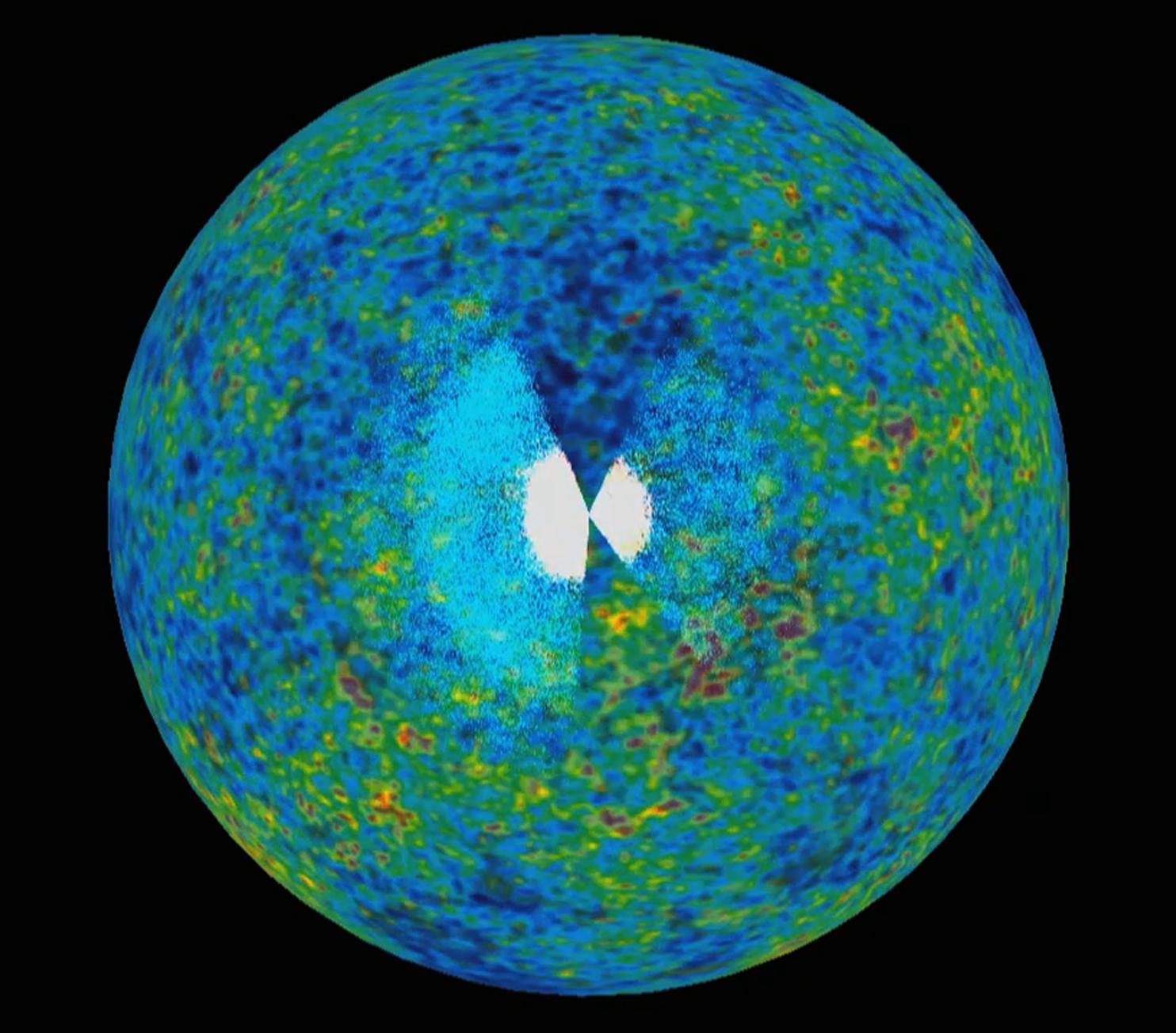
No comments:
Post a Comment